Quick answer: To feed backyard birds through a Kansas City winter, plant native perennials such as black-eyed Susan, purple coneflower, goldenrod, asters and little bluestem, plus native shrubs and trees such as coralberry, eastern red cedar, roughleaf dogwood and American plum. Then leave the seed heads standing until spring.
Feeders help, but they need constant refilling. Native plants keep feeding birds all winter with no upkeep, and mid-fall is still a good time to get them in the ground around Kansas City.
Why do native plants help winter birds more than feeders?
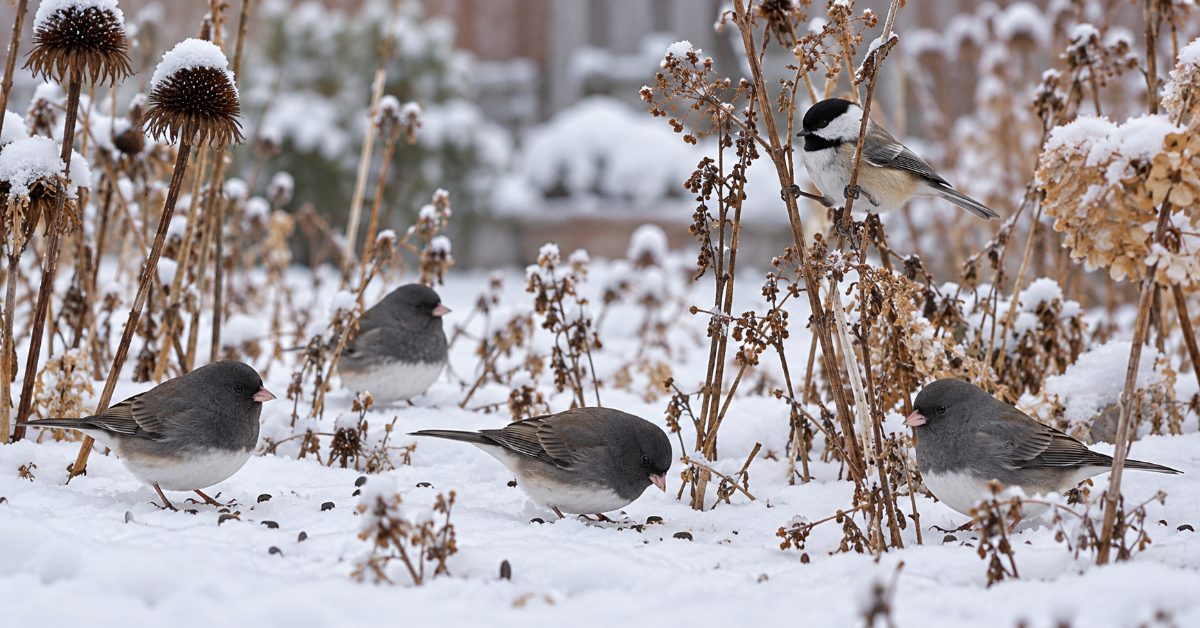
Cardinals, blue jays, chickadees, titmice and nuthatches stay here year-round, and juncos arrive from the north to spend the winter with us. Native plants give them three things they need: seeds, shelter, and insects. The insects matter more than most people realize. Birds depend on protein-rich bugs and larvae, and plants native to our prairies and woodlands host far more of them than imported ornamentals.
Best native perennials for winter birds in Kansas City
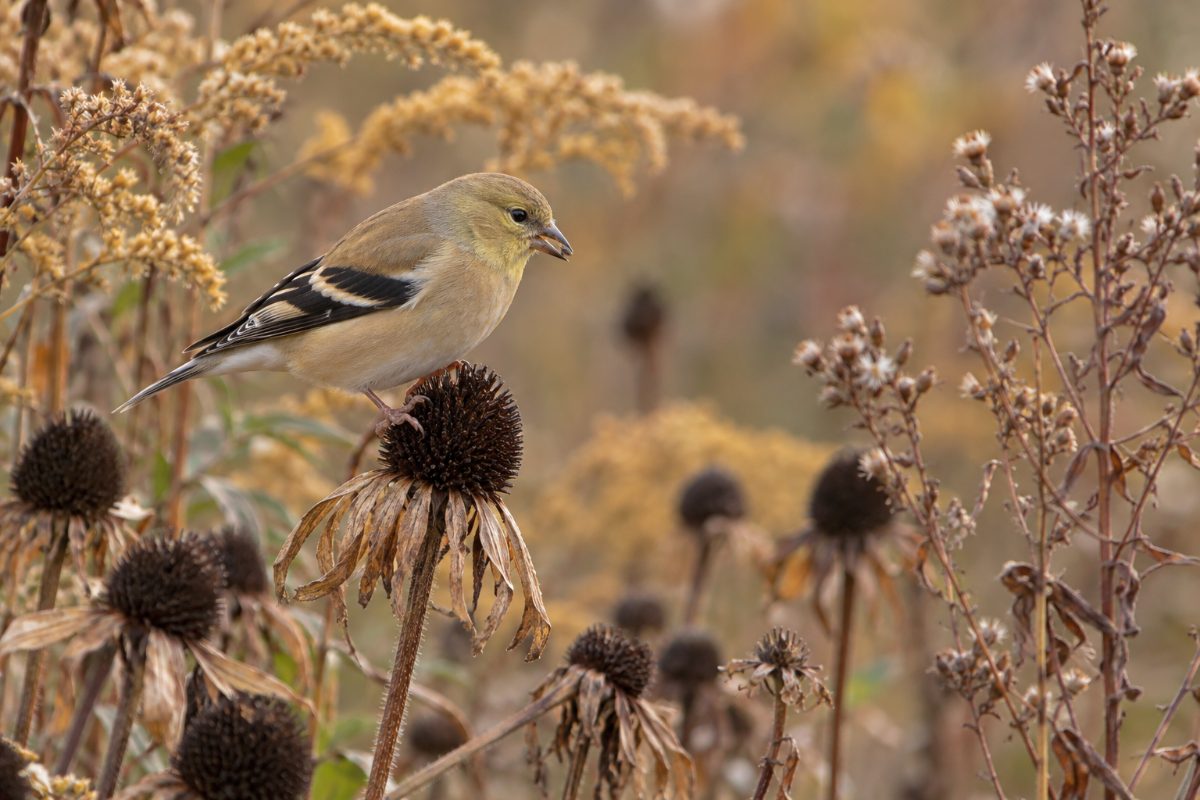
- Black-eyed Susan (Rudbeckia hirta). It’s tough, easy, and packed with oily seeds that finches and juncos love.
- Purple coneflower (Echinacea purpurea). It’s a Missouri and eastern Kansas native with sturdy seed heads that goldfinches perch on all winter. Buy the straight species, not the fancy hybrids. Pale purple coneflower is another great local option.
- Goldenrod and asters. Try stiff goldenrod, aromatic aster, or New England aster. They produce loads of seed, and insects overwinter in their stems.
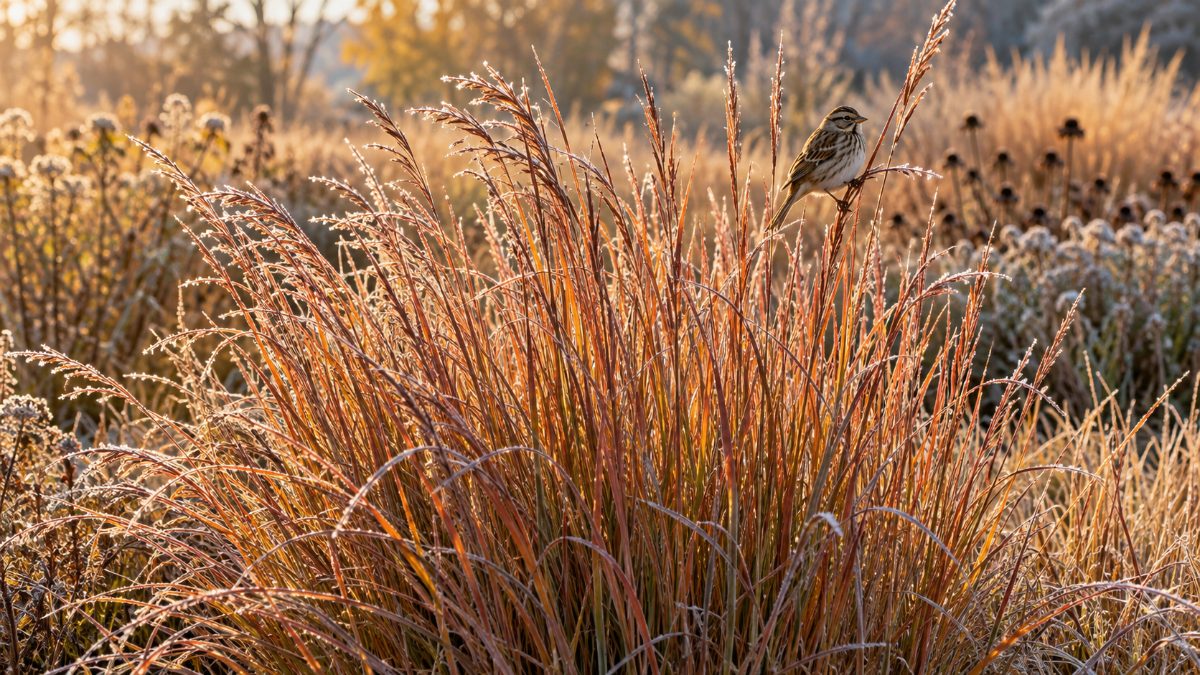
- Little bluestem (Schizachyrium scoparium). This native prairie grass offers seed and cover, and its copper color looks great all winter.
Best native shrubs and trees for winter food and shelter
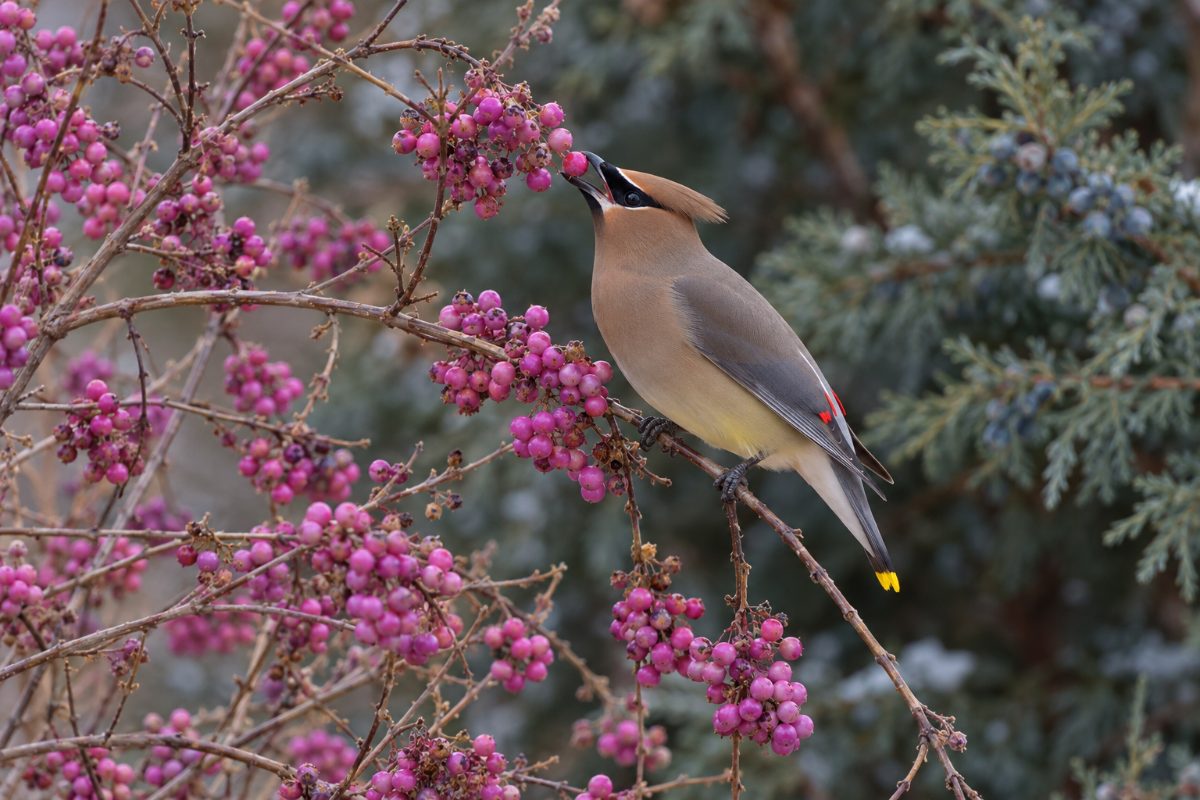
- Coralberry. Its purple-pink berries hang on into winter.
- Eastern red cedar. It provides dense cover from wind and hawks, plus berries for cedar waxwings and robins.
- Roughleaf dogwood and American plum. Both offer fruit, insects, and nesting spots.
Why you shouldn’t clean up your garden in fall
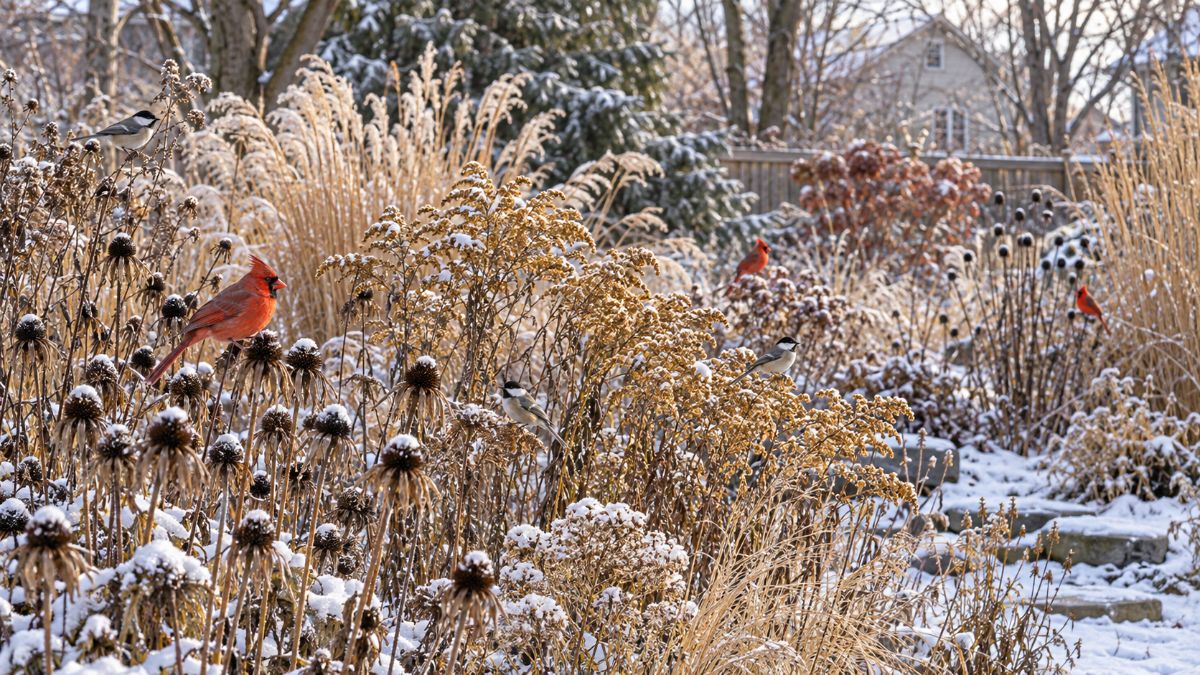
Leave stems and seed heads standing until spring. Your “messy” garden is a winter pantry, full of seeds for finches and juncos and overwintering insects for chickadees and woodpeckers.
Where to find native plants and advice in Kansas City
K-State Research and Extension (Johnson County), the Missouri Prairie Foundation’s Grow Native! program, and Deep Roots KC all offer native plant lists and planting advice. For plants now, try a local native nursery. Vendors at KC’s fall Grow Native! sale included City Roots Nursery, Missouri Wildflowers Nursery, Sow Wild Natives and Tallgrass Nursery.
Frequently asked questions
Do I still need a bird feeder if I plant native plants?
No, but you can use both. Feeders need constant refilling, while native plants provide seeds, berries, insects and shelter all winter with no upkeep. Plants are the longer-lasting food source.
Which birds stay in Kansas City over the winter?
Northern cardinals, blue jays, black-capped chickadees, tufted titmice and nuthatches live here year-round. Dark-eyed juncos arrive from the north to spend the winter in the Kansas City area.
Does goldenrod cause hay fever?
No. Goldenrod pollen is heavy and carried by insects, not wind. The real culprit is ragweed, which blooms at the same time.
When should I cut back my perennials?
Wait until spring. Leaving stems and seed heads standing through winter feeds birds and shelters overwintering insects that birds eat.
Is it too late to plant in October?
Not usually. In the Kansas City area, fall planting generally works until the ground freezes. Water new plants well until then so their roots can settle in.
What birds are hanging around your yard this fall? Tell us in the comments.
Inspired by reporting from The Washington Post.